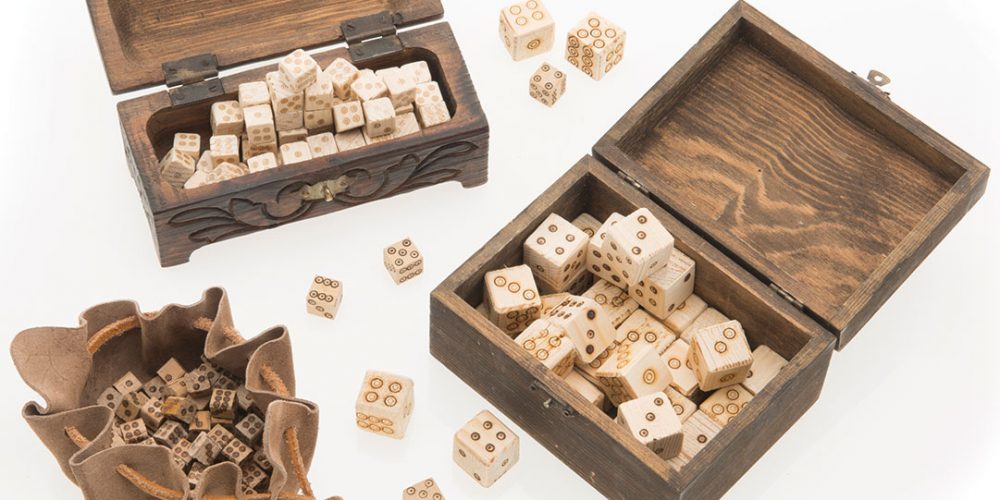
Games can be obtained with a set of wooden dice provided, or you can take just the desired number of dice. The dice are handmade, with six faces, dots and circles look like those in ancient dice. You can also order the Dice Cup, called in Roman times Fritillus, and the Dice Tower with internal ramps where dice tumble down to get shuffled; the tower was called Turricola.
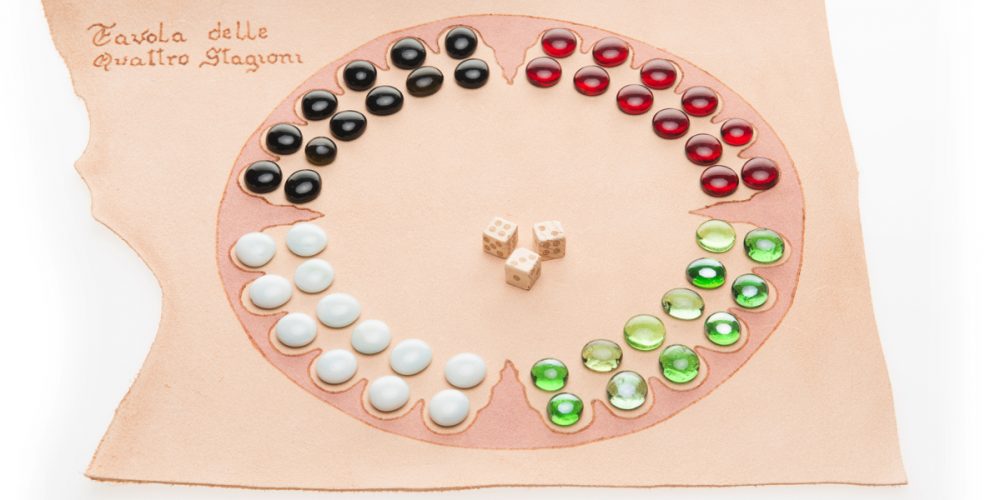
Medieval race board game This board game is the sole medieval one for four players. In the Libro de los juegos it is described as a game in tables family. Each player chooses a colour corresponding to a season and takes place in its sector. This game is an ancestor of the modern backgammon as well, but since is for four players, the game has a different strategy and is more exiting.
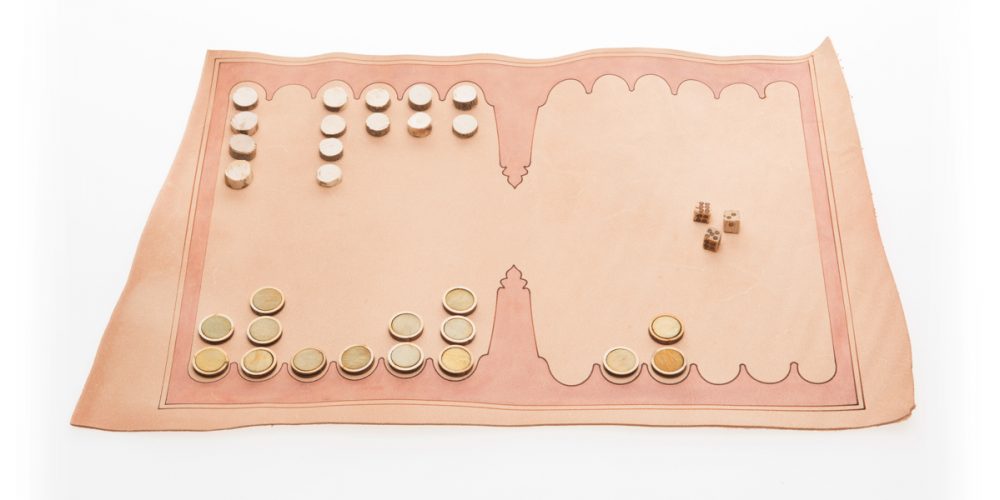
Medieval race board game Tables is one of the medieval versions of the Roman Tabula. In the Libro de los juegos there are fifteen variants of this game and it is drawn in various mediaeval paintings and codes. This game is the most direct ancestor of the modern Backgammon, but it is played in a different and more exciting way.
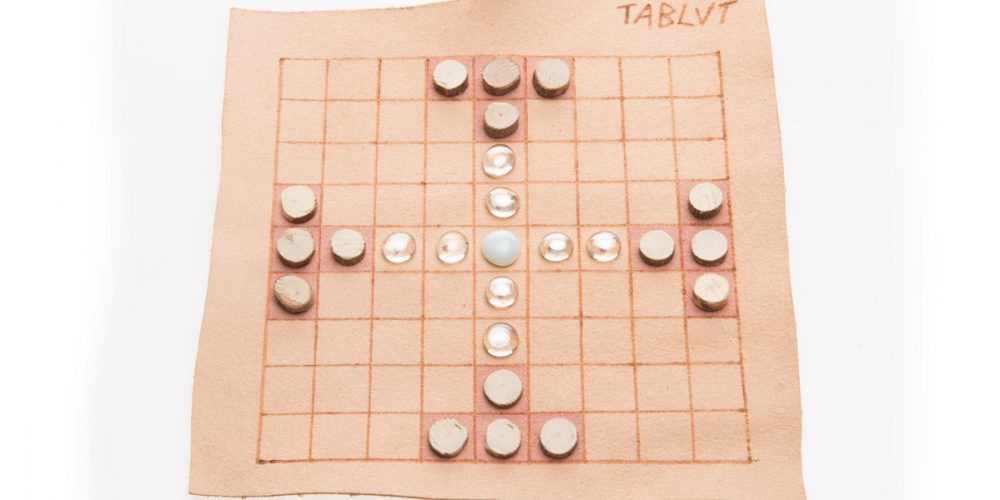
Medieval strategy game Tablut derived from the Viking game Hnefatafl and it was played in Northern Europe during medieval times; it is also known as Linnaeus. The game symbolizes the confrontation between two strongly different sides: the opponents are confronted with unequal weapons, according unequal rules, so the players have different set of pieces, movement possibility and goals too.
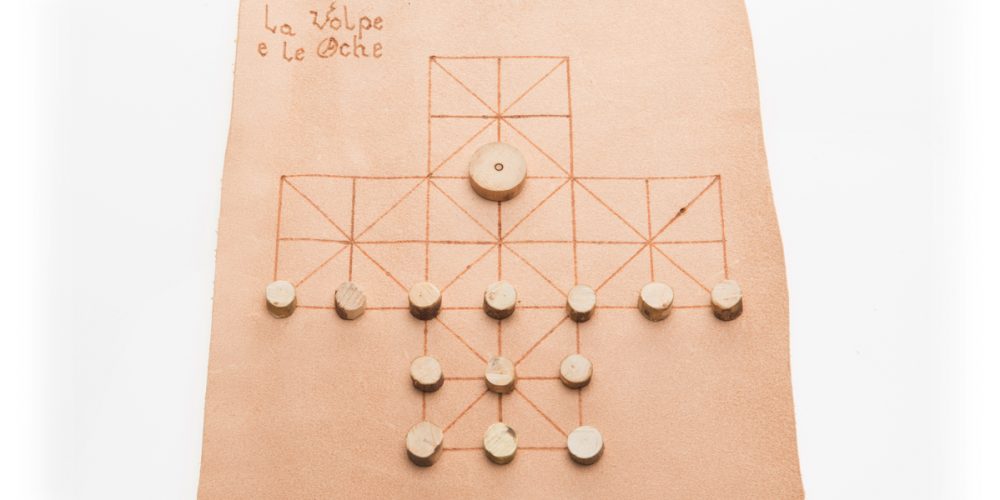
Medieval hunting game This game descend from the ancient Nordic game called Halatafl, derived itself from Hnefatafl, and it is mentioned in the Libro de los juegos as De Cercar the Liebre. The aim of the game is different for the two players, like a hunting simulation.
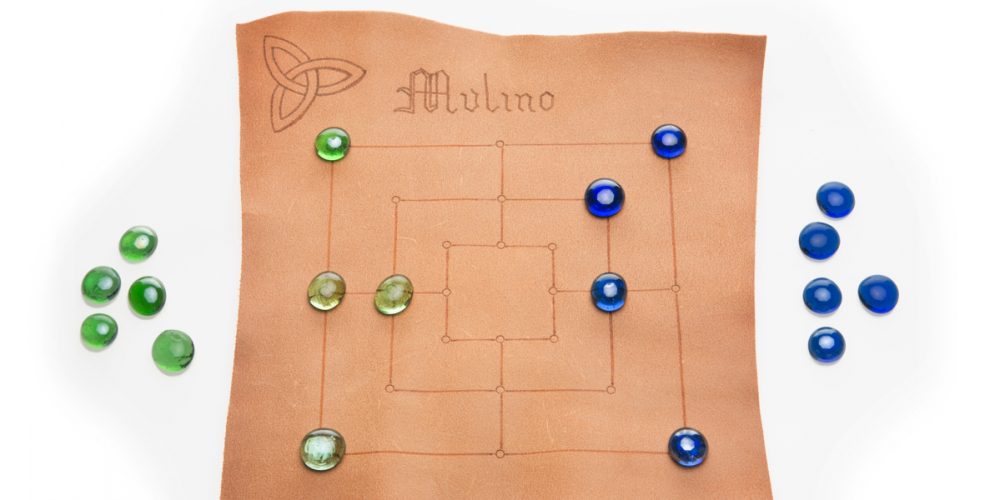
Medieval strategy game Mills is basically a medieval version of the Roman game Tria: the modern Nine Men’s Morris. It is the most recorded game among those engraved on the stones of medieval monuments, especially in sentry posts and in church cloisters. It is played with nine pieces, in fact in the Libro de los juegos is named Alqueque de Nueve.
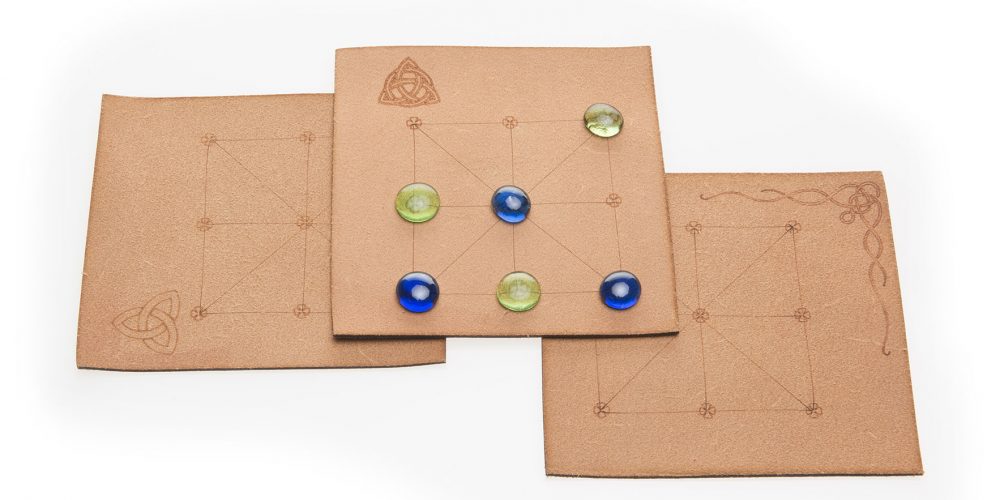
This is a medieval version of Terni Lapilli and also an ancestor of the modern Tic-Tac-Toe.
Medieval strategy game This is a medieval version of Terni Lapilli and also an ancestor of the modern Tic-Tac-Toe. In the Libro de los juegos this game is named: Alqueque de Tres. There are versions in crossed lines and boxes too, but not a version in circle.
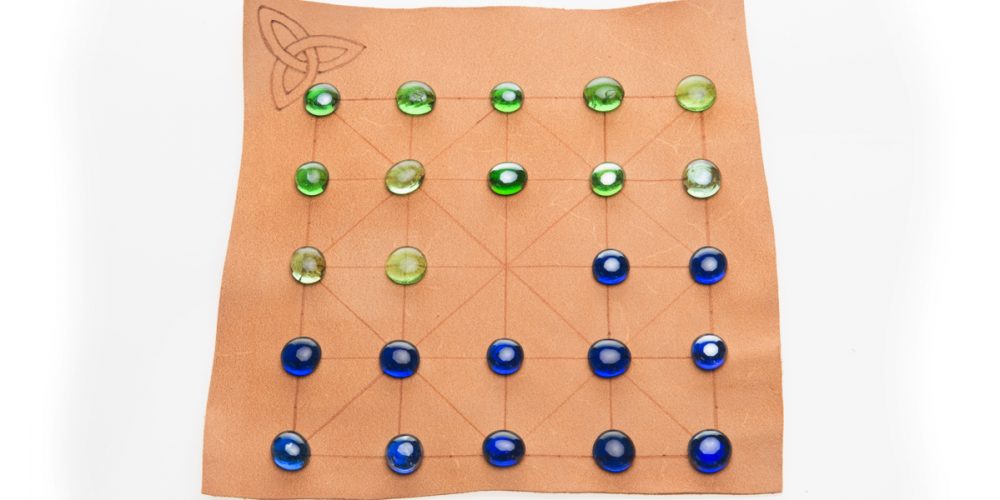
Medieval strategy game This game has a very ancient origin, according to the archaeological finds date back at least to the time of Pharaoh Ramses I, but it was introduced to Spain during Muslim rule and then Alquerque spreads to other countries of Europe. The rules are acquired from the Libro de los juegos commissioned by Alfonso X of Castile in the thirteenth century. It can be considered an ancestor of the draughts.